

What Does the Zero Emission Vehicle Mandate Mean for Your Business in 2025 and Beyond?
If you run a business in Wisbech that relies on commercial vehicles, you'll have heard something about the government's push towards zero emission transport. But the detail of what's actually happening — and what it means for your business in practical terms — can be difficult to parse through the noise. This blog sets out the key facts clearly, so you can make informed decisions about your fleet now rather than being caught out later.
What the ZEV Mandate Actually Is
The Zero Emission Vehicle (ZEV) Mandate is a government regulation that requires vehicle manufacturers to sell an increasing proportion of zero emission vehicles each year. In 2024, the requirement stood at 22% of new van sales needing to be zero emission. That figure rises progressively year on year, reaching 70% by 2030 and 100% by 2035. The targets apply to manufacturers, not to individual businesses — but the downstream effect is significant: manufacturers must hit these targets, which means they are actively prioritising electric vehicle production and gradually reducing the production of diesel equivalents.
What this means for you as a business owner is that the commercial vehicle market is changing structurally. Diesel vans are not going to disappear overnight, but new diesel model development is winding down across the industry, residual values for older diesel commercial vehicles will face downward pressure over time, and the availability and pricing of electric alternatives will continue to improve as manufacturers scale production.
The 2030 and 2035 Milestones
The key dates that business owners need to understand are 2030 and 2035. By 2030, the vast majority of new vans sold in the UK will need to be zero emission — which in practice means electric, hydrogen, or potentially another emerging technology. By 2035, the transition to zero emission new vehicles should be effectively complete for the light commercial vehicle sector.
For a business buying a van today with a typical operational lifespan of five to seven years, this means that a diesel van purchased now could well be your last diesel. That isn't necessarily a reason for alarm — diesel vehicles will remain perfectly legal to operate well beyond both dates — but it is a reason to think seriously about your next purchase. Buying your first electric van now, rather than waiting until you're forced to, gives you the time to understand the technology, adapt your charging infrastructure, and build confidence in electric operation before the transition becomes urgent.
What This Means for Businesses across Cambridgeshire
The Cambridgeshire economy has a higher-than-average concentration of businesses in agriculture, food processing, logistics, and the trades — sectors that depend heavily on commercial vehicles. The transition to zero emission will affect all of these sectors, and the businesses that adapt earliest will gain the most.
Early adopters of electric vans are already benefiting from lower running costs, reduced maintenance expenditure, and — in some cases — preferential treatment from clients and contract partners who have their own sustainability commitments to meet. As the infrastructure for electric vehicle charging continues to expand across Cambridgeshire, the practical barriers to making the switch are reducing month by month.
There is also the question of Clean Air Zones and Low Emission Zones in nearby cities. Cambridge has active clean air policies, and other urban areas across the east of England are likely to follow. If your business involves any regular runs into these zones with a diesel vehicle, the financial and operational case for switching to electric strengthens with each passing year.
Thinking About Finance and Total Cost of Ownership
One practical concern many local business owners raise is the upfront cost of electric vans compared to diesel equivalents. It's a fair point — the purchase price of an electric van is typically higher than a comparable diesel. However, the comparison needs to account for the full picture.
Running costs for electric vans — fuel, servicing, and consumables — are substantially lower than for diesel. A business covering 20,000 miles per year in an electric van versus a diesel van will see meaningful savings in fuel costs alone over the course of a year. Servicing costs are lower because electric drivetrains have fewer moving parts — no oil changes, no exhaust systems, no DPF filters to worry about. When you factor in the total cost of ownership over three to five years, the gap between electric and diesel narrows significantly, and in many cases the electric option works out more cost-effective.
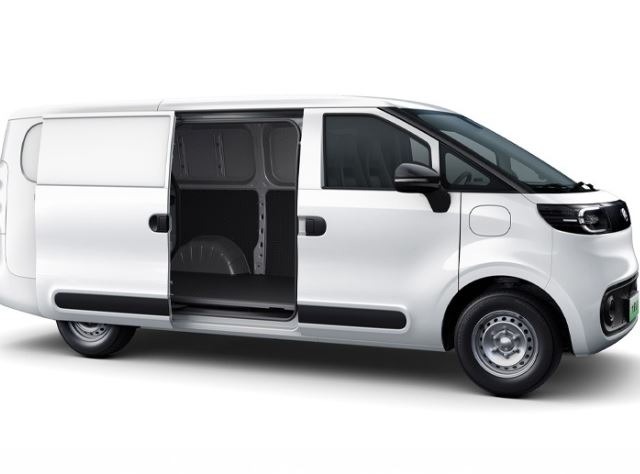
Finance options make the upfront cost more manageable. Finance lease, hire purchase, and contract hire arrangements are all available for Maxus electric vans, allowing businesses to spread the cost in a way that fits their cash flow. Our team at the dealership can help you model the numbers for your specific situation — mileage, use case, and existing finance arrangements all factor into what will work best.
Starting the Conversation Now
The ZEV Mandate is not going away, and the direction of travel for the commercial vehicle market is clear. The question for Wisbech businesses is not really whether to transition to electric — it's when, and how to do it in a way that makes commercial sense.
Starting that conversation now, with no immediate pressure to buy, is almost always the right approach. It gives you the time to understand the technology, explore the Maxus range, think about your charging setup, and consider how the transition fits your business plan. We're here to have that conversation, answer your questions honestly, and help you find the path that works for your business — whether you're ready to order today or just starting to think about what comes next.