




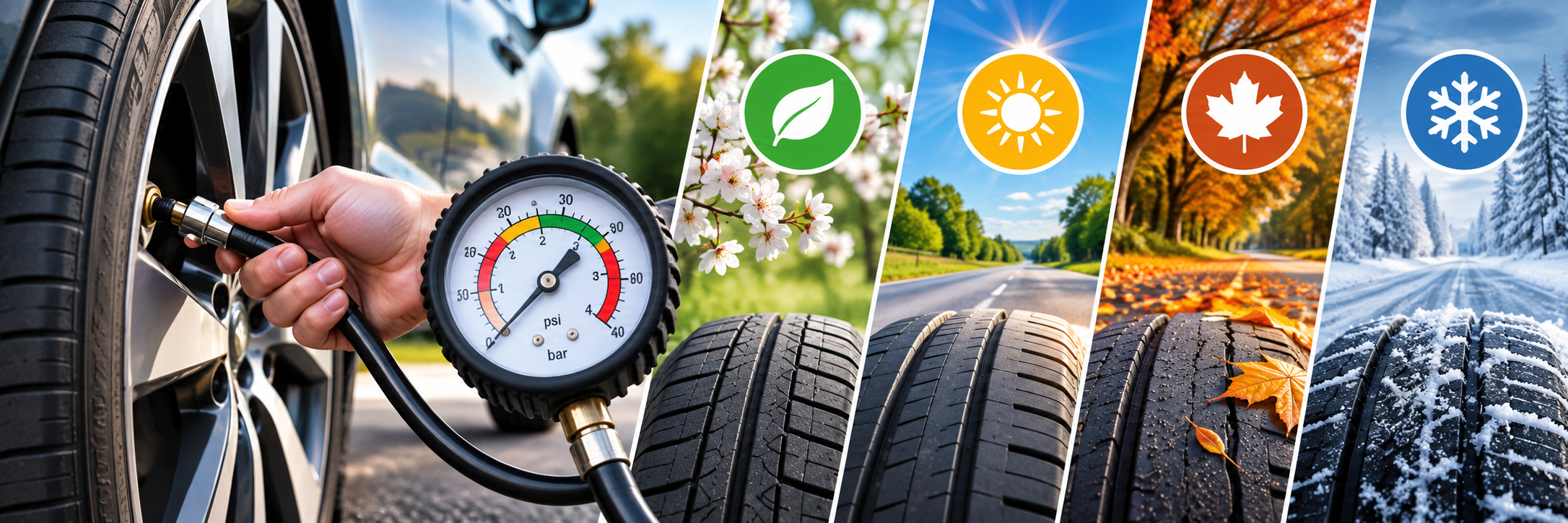
Tyre pressure seasonal checks
Tyre Pressure and Seasonal Checks: Getting Your Car or Van Ready for Winter or Summer
Tyre pressure is one of the simplest things to check, yet it's often overlooked until something goes wrong. As the seasons change, so does the air pressure inside your tyres — and getting it right can make a real difference to safety, fuel economy, and how long your tyres last.
Why Tyre Pressure Changes with the Seasons
Tyre pressure naturally fluctuates with temperature. For every 10°C drop, tyres can lose around 1-2 PSI. That means the correct pressure you set in summer may leave your tyres underinflated once the colder months arrive, and vice versa in reverse. Underinflated tyres run hotter, wear unevenly, and take longer to stop — particularly risky on wet or icy roads.
The Risks of Getting It Wrong
- Underinflated tyres increase rolling resistance, which uses more fuel and causes the outer edges of the tyre to wear faster.
- Overinflated tyres reduce the contact patch with the road, leading to a harsher ride, reduced grip, and wear concentrated in the centre of the tread.
- Both extremes shorten tyre lifespan and can affect handling in an emergency stop or sudden manoeuvre.
Checking pressure regularly — ideally once a month and always before a long journey — helps you catch these issues before they become expensive or dangerous.
Why It Matters Even More for Vans and Fleets
If you're driving a Maxus van or managing a small fleet, tyre pressure has an added dimension: load. The correct pressure for a van running empty is different from one carrying a full payload, and many manufacturers specify different pressures depending on how loaded the vehicle is. Running the wrong pressure under load increases tyre stress significantly, raising the risk of a blowout and unnecessary downtime for your business. Checking pressures as part of your regular vehicle checks is a small habit that protects both safety and productivity.
A Simple Seasonal Checklist
- Check tyre pressure monthly, and always when there's a significant change in temperature.
- Use the pressure listed in your vehicle handbook or on the sticker inside the driver's door — not the maximum printed on the tyre's sidewall.
- Check pressures when tyres are cold, before a long drive, for the most accurate reading.
- Don't forget the spare — it's easy to overlook, but a soft spare is no help in an emergency.
- For vans, adjust pressure to reflect your typical load, and check the operator's handbook for laden vs unladen figures.
Let JS Holmes Take Care of the Details
Tyre pressure checks take minutes, but they're easy to forget in a busy schedule. Our aftersales team in Wisbech can check and adjust your tyre pressures as part of any service, alongside a full inspection of tread depth and condition — for cars, Nissans, and Maxus vans alike.
Book a service with JS Holmes today and keep your vehicle running safely, whatever the season.